That sounds a bit like an odd warm up to a lame joke.
It's this: they all get the danger of ideals.
Dorothea had Will Ladislaw.
Claude had Enid.
Madame Bovary had. . . way too many people.
I am a little over halfway through One of Ours by Willa Cather and my heart is already bruised a bit for Claude Wheeler. Of course, I'm also a little bit fatigued by his self pity as well. The poor fella has had to deal with one disappointment after another, but the most stinging disappointment is the one he feels in himself. He's convinced the whole world is against him and there is simply no good luck for him in it.
Ain't that a nice way to look at the world. I just want to shake him sometimes.
He could have stood up to his dad.
He could have stayed in college.
He could have married the girl with spunk.
But, he didn't. And it isn't the world's fault. It's his.
In Middlmarch Eliot schools us about the danger of clinging to what you "think" will make you happy rather than pursuing what actually does. Madame Bovary wastes her life away in search of a life fit for thrilling french novels. And now Claude is marching off to war because that's where true happiness must certainly be found.
I'm not there yet, but to quote Luke, Han, and Leia. . . . "I've got a bad feeling about this."
Thursday, January 14, 2016

Wednesday, October 1, 2014
O Captain! My Captain!
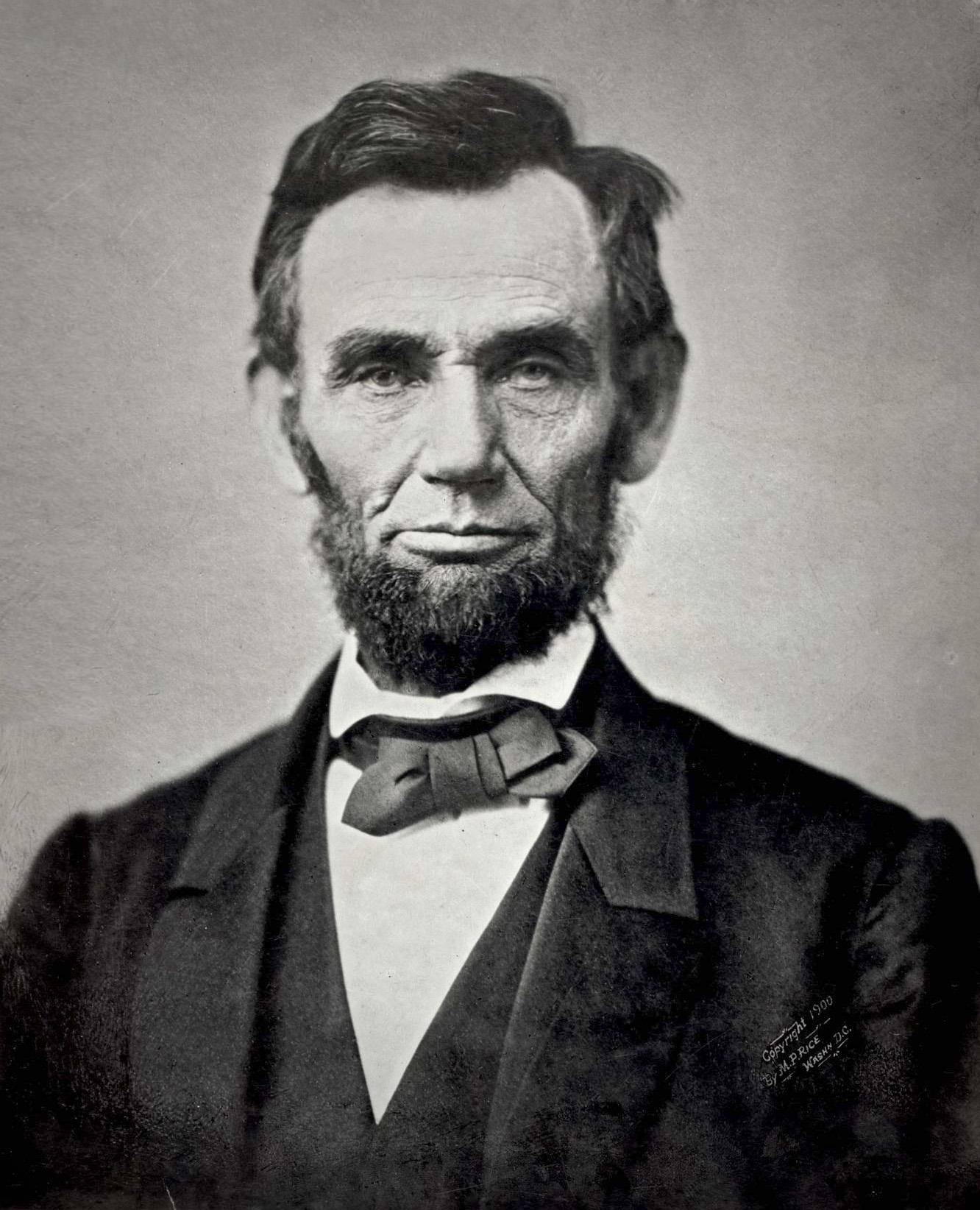
An Open Letter to Doris Kearns Goodwin:
I cannot trace the origin of the open letter strategy, but since Salmon Chase used it, I suppose I can. Thank goodness he isn't alive to correct my grammar or admonish me for my sense of humor. By the way, did you sprain any eye muscles from over-rolling when you sketched Mr. Chase in words. Wow. Arrogance, thy name is Salmon.
I digress.
My gratitude is yours for creating such a profound book as Team of Rivals. After two renewals at the library and a delicious airplane ride of uninterrupted reading, I finally finished--moist eyed and truly grateful that such a man as Abraham Lincoln walked the earth. The passenger next to me on the plane asked me about the behemoth book on my lap and I gushed far more than I should have to a complete stranger. He quipped it would take him a year to read such a book. I replied that it would be worth it.
Why did it affect me so much? I grew up in North Carolina--the Civil War ain't new to me. Of course, I heard a different version of how it all went down, but Abe was by no means demonized in my education. I had read other books about Lincoln as our last great hope, as an honest man, and a political genius. But this one, this was something more.
Lincoln burnt no bridges and carried no grudges. That, I believe, is the salient point. Seward, Chase, and Bates had all cultivated some shoulder chips going into the Republican Convention. Only Lincoln bore no enemies. Combining his clean record with a dogged work ethic, he won the nomination humbly and intelligently. His pattern was established.
Your skill is stunning. I cannot imagine the long hours and days you spend researching enough material to tie together such a seamless narrative. How do you do that?!? It was amazing. Did you find yourself longing to write more letters? I did. I felt such a lack in our current leaders speechmaking skills and a serious dearth in our own personal communication habits. The letters between friends and lovers were powerful and prolific, weren't they? Our quick emails and txts (why DO people leave out the e in that word? Is it really that much harder to write?) perpetuate shallow interactions themselves. I aim to write more letters and thoughts because of this book.
I am wondering how writing this book so many years after Lincoln affected your views of our modern government. The artful movements of Lincoln with his whining cabinet and egotistical generals (McClellan! Wow. Just Wow.) were awe-inspiring. I've listened to C-SPAN rather extensively and though Phil Graham's voice has a lovely lilt, I don't know that it soothes ruffled feathers. What can we learn?
Your book should be required reading for every person running for Congress and Senate. They should have to write a paper on it before swearing in, and paragraphs should be read on the floor before every debate.
It's that good.
Thank you for writing such a brilliant piece of work. Thank you for taking the time to explore a man such as Lincoln--a flawed man with a brilliant mind, a warm heart, and a fantastic sense of humor and stories. Though he might not believe in life after this death, I do, and I look forward to the day when I can meet him, watch him unfold his legs in front of some heavenly fireplace, and listen to him tell his stories of humor, sorrow, courage, and fortitude.
And, then, I think he'll say: "You know that Doris, she got it just about right didn't she. I think I'll send her a letter."
Thursday, August 29, 2013
Wharton. . . Tarkington. . . and Reynolds
So, after a move to the mountains of Virginia and almost two weeks at my new teaching gig, I'm happy to be back at the keyboard.
I'm halfway through Alice Adams by Booth Tarkington, and I'm impressed. Tarkington nails, with candor, some social cues and feminine techniques that really surprised me. I'm not the only one who does the "make-up" face, right? I learned that term in college when I realized that I'd been doing it since I was twelve.
More on that book later.
Oh, Age of Innocence, how I loved thee. . . again.
I had so many posts written in my mind for the weeks after I finished the novel. I wanted to look at the meanings behind the names (New-land? Archer?... not accidents!) I wanted to wax poetic about the ending.
Why does Newland just walk away???
There's the cupid imagery, and the floral imagery. And then I watched the movie, and an entirely different post rattled about within.
But, packing and cleaning had to be done. Children had to be soothed amidst the change, and a better living arrangement had to be found. So now, we are in the midst of another move. But, this one is semi-permanent, for at least 2-3 years. We won't be storing our moving boxes this round!
So, what exactly am I going to write about here today? Not sure. In the words of Indiana: "I'm making this up as I go."
Teaching Spanish again depresses me. I detest teaching something to someone who has ZERO interest in learning it. It is like trying to cheer up quicksand sometimes, getting this students to care about anything. Just watching them trudge through the hallway depresses me. I'd forgotten how hard high school teaching is on my soul.
And it is only week 2. Ouch.
So, I must find other ways to feed the soul. I will write more entries of gratitude in my journal. I will simplify my teaching so that I have some time to read from my Pulitzer list every day and can write a couple times a week. I'm not fortunate enough yet to be able to turn "do what I love and love what I do" as far as earning money goes. But, I can do more of what I love and perhaps that will help me love what I do. . . even the part about teaching conjugation.
Vamos.
I'm halfway through Alice Adams by Booth Tarkington, and I'm impressed. Tarkington nails, with candor, some social cues and feminine techniques that really surprised me. I'm not the only one who does the "make-up" face, right? I learned that term in college when I realized that I'd been doing it since I was twelve.
More on that book later.
Oh, Age of Innocence, how I loved thee. . . again.
I had so many posts written in my mind for the weeks after I finished the novel. I wanted to look at the meanings behind the names (New-land? Archer?... not accidents!) I wanted to wax poetic about the ending.
Why does Newland just walk away???
There's the cupid imagery, and the floral imagery. And then I watched the movie, and an entirely different post rattled about within.
But, packing and cleaning had to be done. Children had to be soothed amidst the change, and a better living arrangement had to be found. So now, we are in the midst of another move. But, this one is semi-permanent, for at least 2-3 years. We won't be storing our moving boxes this round!
So, what exactly am I going to write about here today? Not sure. In the words of Indiana: "I'm making this up as I go."
Teaching Spanish again depresses me. I detest teaching something to someone who has ZERO interest in learning it. It is like trying to cheer up quicksand sometimes, getting this students to care about anything. Just watching them trudge through the hallway depresses me. I'd forgotten how hard high school teaching is on my soul.
And it is only week 2. Ouch.
So, I must find other ways to feed the soul. I will write more entries of gratitude in my journal. I will simplify my teaching so that I have some time to read from my Pulitzer list every day and can write a couple times a week. I'm not fortunate enough yet to be able to turn "do what I love and love what I do" as far as earning money goes. But, I can do more of what I love and perhaps that will help me love what I do. . . even the part about teaching conjugation.
Vamos.
Monday, June 17, 2013
Coincidence?. . . I think not.

Chapter 15
My heart leapt with joy when I read this phrase. I read Middlemarch in college and was completely floored.
Surprisingly, others weren't.
I still remember the first day we had a discussion in class about it. I was completely in love with the main character, thinking her valiant, brave, idealistic, though a bit of a masochist. I felt like we could have been kindred spirits.
Everyone else hated her.
As I sat in class, stunned, my peers stripped Dorothea down and labeled her as an unhealthy idealist who sought suffering instead of joy and was determined that life should be holy instead of happy.
I just wondered if we had been reading the same book.
As I kept reading though, my eyes were opened. . . and so were Dorothea's. I ended up writing my senior paper on the danger of ideals. Dorothea was a semi-saint who had painted a picture of happiness in her mind and fastidiously climbed towards it, even when it didn't actually make her happy.
Raise your hand if you've done that.
My hand is up.
Perhaps Newland's is as well. That is why I don't think it a coincidence that Edith Wharton dropped Middlemarch in at this moment. Newland is wrestling with desire right now. He has not fully admitted his feelings for Countess Olenska, but he is painfully aware that the worshipful glow for May Welland is dimming. His ideals have gone fuzzy.
Ideals do that.
First, Newland was blissfully in love with a flawless May. Then the dark Ellen entered, first to his embarrassment, and then as a beautifully honest refreshment, who "doesn't care a hang about where she lives---or about any of our little social sign-posts." He is torn.
One is all he thought he wanted for his entire life. The other is now what he thinks he might want for the rest of his life.
Decisions, decisions.
How do we face decisions like this? I think too often we make decisions based on what we are sure should make us happy, and not what actually does.
We all did this in middle school, right? (I pretended to like the band Poison and wrestling. . top that.) But I don't think it ended there. We hesitate to admit what we really like and perhaps play along with what we think we should love to do/watch/eat/enjoy.
Toss the ideals and go for the honesty.
Edith Wharton and George Eliot were really on to something.
And I think Newland is going to catch on. Eventually.
Wednesday, June 12, 2013
Past the Point of No Return
"And all the while, I suppose," he thought, "real people were living somewhere, and real things happening to them. . ."
Chapter 19
After a painfully honest and tender episode with Ellen, Newland realizes that by pushing her to release her wishes for divorce, he has destroyed any chance of them being happy together. He is engaged and She is married. They dance back and forth between temptation and reality.
Neither of them have an answer for this situation, and Ellen's self control is admirable. Before they part, Newland reads a telegram May had sent to her cousin Ellen, announcing that her parents had acquiesed.
They were getting married in a month.
The next chapter opens with Newland in the rehearsed trance, playing the part of the anxious bridegroom, checking the ring, pondering the presents, and waiting for his blushing bride to stand by his side.
In these moments, the dance of of his life unfolds before him. His wedding felt like a night at the opera, not a joyful joining of hearts. It felt vacant and surreal. And yet, somewhere, Newland believed that there were real people who were living a real life.
Does this give him hope or despair?
Sometimes knowing that there is something real and better out there can be a two edged sword. Having something to look forward to is magical, but can also make slogging through the present more of a challenge.
Or maybe that's just me.
Do you think at this moment Newland wishes that the Countess Olenska had stayed in Europe? Is it truly better to have loved and lost than to have never loved at all? That trite saying is easy to whisper to a teenager weeping on her bed over her first "broken" heart. But, how about for our grown up troubles?
Newland faces a scripted life after he had just tasted the beautiful possibility of writing his own exciting improvisation. We will see how it unfolds. Though he might think otherwise, the life he is living is real.
And so is ours.
Tuesday, June 11, 2013
Innocence or Knowledge?

Chapter 16
Newland is crumbling, and so is his illusion of May.
In a tizzy of denial, Newland has fled to Florida in a mad attempt to convince May to bump up the wedding. She is curious as to why and wonders about Newland's loyalty. Her line of questioning is misdirected in its detail, but she is astute in observing that Newland's heart is wandering away.
But, those rare moments where May seems to see through the fog for just a moment are brief and Newland realizes how closed she truly is.
Who should we pity more, May or Welland?
May sees the world as she wants to, as she's been told to see it. That is a pitiable state, albeit it blissfully ignorant. Newland's eyes have been opened and will most likely stay that way for the duration. This is painful, but at least it is real.
Which is worse?
Since this question has been in play since Adam and Eve, I don't expect an easy answer. . . and I doubt Ms. Wharton does either.
Saturday, June 8, 2013
Rip the Band-Aid?

"Better keep on the surface, in the prudent old new York way, than risk uncovering a wound he could not heal."
Newland has come to talk to Ellen about a divorce. His family and future in-law clan have begged him to convince her not to pursue one. And why? Wharton skillfully dances around the actual reality, but there are suspicions that, in her misery, Countess Olenska found some joy on the side during her marriage. Newland doesn't necessarily fault her for that, but the double standards of New York certainly do. Her European husband is warning that he'll make public all the rumors should she push for a divorce.
Nobody wants that.
Least of all New York.
And so though Ellen is willing to brave the wound, noone else is and Newland is there to encourage prudence. And it is during this scene that a new wound is born. What draws Newland to Ellen, do you think? Is it the elusive nature of her heart? Is it her mysterious past? Is it pure physical attraction?
Or is there more?
There is a willingness to see things in Ellen Olenska. She is willing to look through the mist, uncover the wound, and face the truth. This is painfully refreshing to Newland Archer, and his world will never be the same for it.
And now for us. Are we more like May or Ellen? Do we wrestle the kid to the ground to dig out the splinter, or do we just hope it will work itself out because it isn't worth the trouble. I've done both---in reality and metaphorically.
I hate difficult conversations, confrontation, and bad news in general. My least favorite part about teaching is calling the parents when their kid is in danger of failing. I put it off like a coward.
(I would like to note that I do realize these people are not real. I promise)
Fiction has its lessons. We can rip the band-aid, pull the splinter, have the conversation, make the change.
And I believe we'll be better for it.
After all, wounds do heal.
Friday, May 31, 2013
Moving Right Along

Tomorrow is phase one of our move!
We are taking all our stuff up to Virginia tomorrow to check out our new digs. Then we'll be back at Grandma's until the end of June and commence Phase Two: Total Relocation.
I just wanted to justify my two post week. I've had lots of really good thoughts, but I've been too busy cleaning/mopping/packing to do anything with them. This is, I must say, our most organized move ever. My back is sore from mentally patting it myself many times the last few days.
And how are we all feeling about this move? Let's check the polls:
Patriarch: Peaceful and excited
Matriarch: Excited, terrified, sad, excited, and a little bit of disbelief thrown in because this is crazy that we are doing this!!
Oldest Offspring: Thrilled to be going somewhere with rivers, waterfalls, and mountains
Middle Offspring: Detests this idea and is currently fielding applications of potential adoptive families in NC.
Youngest Offspring: Asks every day if we are going to Virginia. . so I think she's okay with it.
I should be back to regular schedule (even though I don't actually have one of those yet) by next Tuesday. Don't give up on me!!
Wednesday, May 29, 2013
Let me explain, no is too much. . . Let me sum up.

Well, I do. . but that's another post.
Now I can happily chalk up my reading to productive "research" for my next post to satisfy the aching hunger of my readers. (Just play along)
Unselfish reason: I want women to ignore the baseboards and read good books, even if they aren't in a book club that gives them permission to do so. And especially if they are in a book club that only picks mind candy. I am not anti-mind candy! Don't hate. There are just so many wonderful books out there to discover, and they are left wasting away on the cheap shelf at Barnes and Noble. And they are FREE on Kindle! So, let's read them.
Folks might pick up this blog at different stages, and my hope is that wherever thou art, this blog acts well its part. Which means if you jump into the middle of a story, no matter how well-written, you could feel totally forlorn, or God forbid, bored.
A reader wisely brought this quandary to light and suggested that there be some sort of a catch-up moment with each post. I don't want to bore anyone that is following along steadily and, hopefully, reading the book, so here's my solution. I will write a summary post for each book and put a link to it at the top of each post, with the quotation from the book. That way, if someone happens to come along midstream, they can get a quick summary and character list. I still haven't figured out how to avoid spoilers as I go along. Any ideas on that front?
So, now to a summary of The Age of Innocence by Edith Wharton:
The Age of Innocence is Edith Wharton's sharp view of New York's upper crust in the early 20th century. Newland Archer is recently engaged to the sweet, but sometimes vacant May Welland. The match is utterly perfect and Society rejoices. Cue the wrinkle. Countess Ellen Olenska, May's cousin and Newland's childhood chum, returns from Europe in a dark shadow. The beautiful Ellen has endured a troubled marriage and fled back to a Society that wishes she hadn't. Newland is drawn to her side, first as an ally because of her relation to May, and then as an admirer for her unique spirit and enchanting appeal. The story unfolds as others court the still married countess and Newland wrestles with a shallow devotion to May, a frustrating distaste for the vapid life mapped out for him, and a growing passion for Ellen that endangers everything he has known or trusted.
Now, doesn't that sound like fun?
Monday, May 27, 2013
Slippery Slopes

-The Age of Innocence, Chapter 14
Oh Newland. . . this reminds me of myself going with the "kids" to get "them" some ice cream, but quite certain I won't have any at all.
Right.
The road to self-deception is a slippery one, and I wonder at this point how aware Newland is of his feelings for Ellen Olenska. He makes this choice to book this trip because Mrs. Reggie just happens to live in the same neighborhood as the family where Ellen Olenska is staying for the weekend, citing to Newland that she had to "run away." Newland doesn't know from what, and if knew what was "good" for him, he'd have let the girl run.
But, he doesn't. And because of that, we have more book to read.
So, do we judge? Do we cheer? Do we wave our arms as we read, warning Newland to stay away, sit at home, look at pictures of May Welland and accept the docile life happily spread out before him by Society? He isn't married yet. Should he turn over a few more rocks? The problem is, Ellen Olenska is married. True, it is a miserable marriage and the brute is still back in Europe turning over countless rocks and planting a plethora of wild oats.
Hence the tragedy. Wharton can sure spin a heart-wrenching timeline.
Back to our own Newland moments. How often do we hop on the internet for "just a few minutes" to check on something. . . and two hours later are still there? Why do we set ourselves up? Is it because we overestimate ourselves? True honesty is a valuable commodity, and we trade in it fairly regularly with others. It is with ourselves that it becomes a rarer exchange. That doesn't need to translate into a steady stream of self-flagellation. Quite the opposite. How different could Newland's path have turned if his internal monologue reflected the simple truth: he wanted to see Ellen. Then, though the moral quandary would have remained, perhaps the internal struggle would have been less severe.
Here Newland, let me show you how it's done:
I'm going to the ice cream shop today. I'm taking the kids with me. I'm getting ice cream. And I'm letting them get some too. Why? Because I really like ice cream, that's why.
That's me, taking the stairs instead of sliding down that slippery slope. And that feels better.
Wednesday, May 22, 2013
Swimming Upstream
"His heart sank, for he saw that he was saying all the things that young men in the same situation were expected to say, and that she was making the answers that instinct and tradition taught her to make--even to the point of calling him original"
--The Age of Innocence, Chapter 10
Hoo-boy. . the angst is a'coming. Newland Archer is feeling the pangs of "sameness" set in and a life of shadowy cave dancing stretches before him with little hope of real living, refreshing banter, or even a few healthy disagreements with sweet May. Even in an "argument," May was playing the part and toting the line she'd been molded to tote. Can you blame her?
And will Newland break free?
Do we?
When I read this I felt a new pang of sympathy for Mr. Archer. I have often wondered how I would have fared as a white antebellum woman born to privilege, or a pre-suffrage female, or even a fifties housewife. Could I have bucked the trend, smuggled the slaves, chained myself to Elizabeth Cady Stanton, or pursued higher education? I like to flatter my independence and say I would have, but who knows?
I think we underestimate how truly hard it must be to swim against a current. Those salmon are something special. We are fluid creatures and the easy path comes so. . .. well, easily. How do those that turn and stand do it? To what do they cling?
As a high school teacher I saw lots of folks who thought they were swimming upstream. But, they weren't. They were just swimming in a different stream. Those who truly make a difference don't do it for the sake of being independent. I believe they do it because the cause is worth it. It is worth the risk, the prison, or even the shame.
I don't know if Newland has it in him. But I certainly hope I do.
Thursday, May 16, 2013
Diverging Roads. . . and Honest Mothers

"Isn't that perhaps the reason?"
"The reason--?"
"For their great influence; that they make themselves so rare."
He coloured a little, stared at her--and suddenly felt the penetration of the remark. At a stroke she had pricked the van der Luydens and they collapsed. He laughed, and sacrificed them."
Before I move on to the meatier matters of this post, let's just pause a moment and savor Wharton a bit. Check out the verbage in that last phrase: pricked, collapsed, laughed, sacrificed. Well done, Edith. It is writers like Wharton that remind me how beautiful a well placed word can be. Can't you see the image of the quietly ill van der Luydens crumbling under the sudden poke of Ellen's sincerity, and then Newland's laughter burying them completely? Take your twinkly vampires and dystopian killing fields. . . I'll keep Wharton in my pocket.
I don't always read the high minded stuff. I've been known to google "Sean and Catherine" a few times (a day). Don't judge. In fact, you should be refreshed by my honesty.
That is what this post is all about.
So, why the Robert Frost picture allusion in the beginning? Because, in this conversation, this candid moment, Ellen and May diverge in a wood. A candid path marked by raw emotion is laid out for Newland--a path certainly less travelled in his world.
And when he laughs, he joins her, if only for a moment.
She will not always say the perfect thing--this dialogue makes that clear. In a moment, reverenced society is shaken and we see hints of an enchanting sincerity that might prove dangerous.
Is sincerity dangerous?
In an odd cosmic turn of events, two other blogs, with no advance collaboration, wrote on similar veins of the value of rough and tumble honesty. One pondered the value of mothering honesty amidst the onslaught of perfected pinterest ponderings and gushing mommy blogs. I think her one of the most doting and fabulous mothers ever. I sometimes feel guilty for not adoring my children enough. I am too good at seeing their humanity I fear.
The other is a blog I've long admired for her balance of goodness wtih a healthy side of edge. Both of these women are far funnier than I am, so I'll wait here while you poke around a bit.
Are you back?
What we all three have in common with Madame Olenska is this: Honesty is undervalued. Here she is stuck in a world that has no appreciation for the hellish marriage she'd been enduring in Europe for the last several years. She is forced to tiptoe through the rites of passage all over again, playing the game that has done nothing but hurt her. But alone, by her fireside, she enjoys a burst of clarity. And, ah that clarity is refreshing.
Facebook has perpetuated this lack of clarity. If I were to judge myself in comparison to the majority of other people's posts--I would feel monumentally lame. They adore their children. They love where they are. Their husbands dote on them. Or, they are so productive and busy that they can't keep up with things because they simply have so much wonderful stuff going on in their multi-tasking amazingly talented overcommitted universe. Or thereabouts.
I think there is also a badge of honor we like to hold out for even our imperfection. We wish we could have more time to ______, we pine, but we just have too much going on. If I really have that much going on--why am I on Facebook? I'll tell you why, because it is an easy way to feel validated and pathetic all at once. I think we assume that everyone else is being sincere, when really many dance to the same tune as Newland's society. Once in awhile there is a blog or a post or a status that pricks and collapses.
And then we laugh. We laugh because it feels so good not to be the only human in the room. I think that is why Newland laughed at Ellen. And that is why I am going to try much harder to laugh at myself. Because I am flawed. I am human. I am a flawed, flabby, time-wasting, human that sometimes watches lame movies, eats marshmallows out of the bag, and lets encourages my kids to watch something on a screen so I can get a blasted nap.
There, I said it.
Did you laugh?
Tuesday, May 14, 2013
Overflowing Bliss
"Evidently she was always going to understand; she was always going to say the right thing. The discovery made the cup of his bliss overflow."
--The Age of Innocence, Edith Wharton

Newton Archer and May Welland are engaged
and have made the official announcement. Much to Newland's chagrin, it was
forced a bit by the dark and mysterious Countess Olenska's questionable return
to society.
If I had to live in the society Wharton
so sharply describes, I believe I might poke my eyes out with my own dance card.
But, I digress. We'll discuss this treacherous society later. For now, I'd like
to talk about another danger:
The danger of sublime expectations.
The gloss on May Welland will fade,
but not because she suddenly stops saying the right thing. It is, in fact,
because she always does. In the beginning Newton follows the dance of the
happily betrothed and sees only beauty in his blushing gal and her sweet
submission.
This doesn't last. Newton yearns for spark, he craves imperfection, a
rough edge to snag on. And we turn the pages wondering if he ever will.
All of us have entered a
relationship with high expectations. We enter lots of things with expectations:
marriage, parenthood, restaurants, movies, frozen yogurt bars. We have our
minds set in one direction, our perceived notion of how exactly this is all
going to play out. And when those expectations are suddenly unmet, the deflation
can be painful.
How do we fix that? Do we sally forth into
life with a chip on our shoulder and an expectation for everything to be
screwed up, lame, and worthless? I don't know that Newland would be any happier
in this moment if he shook himself out of the bliss and decided to approach
marriage with dread and sorrow.
No, as Donne would say, we must seek the "via media."
There is a peaceful middle ground. I'm not saying I've found it, I just
know it is out there. I believe we have to give life a chance
to get lived. We have to give people a chance to get known. I once had someone
I know, trust, and admire give me a very clear description of an administrator I was going to be working with. "He won't
support you. He is so hard to work with. Avoid him." I was adequately
warned. Fast forward a few months, and this guy was my favorite Assistant
Principal. He became my go-to man when I needed back up with a student. He was
supportive, loyal, and consistent.
Now, back to
"bliss." Newland is setting himself up for sorrow here. Of
course he should look at his future bride with hope and joy. We all set out
that way the day we say those sacred vows, have that child, or start that new
job. But, if the expectation is sublime perfection, then we are dooming
everyone to frustration.
Therefore,
what do we expect? We expect them. We expect to love this person or
child or moment to the very best of our ability. We expect them to learn and
laugh and grow with us. We expect frustration and enlightenment.
We expect humanity.
If what we want is a flawed human
experience we can love with our entire, flawed heart, then our slightly cracked
cups will overflow as much as Newland's did--if not just a little bit more.
Monday, May 13, 2013
The Age of Innocence, A Summary Post
The Age of Innocence is Edith Wharton's sharp view of New York's upper crust in the early 20th century. Newland Archer is recently engaged to the sweet, but sometimes vacant May Welland. The match is utterly perfect and Society rejoices. Cue the wrinkle. Countess Ellen Olenska, May's cousin and Newland's childhood chum, returns from Europe in a dark shadow. The beautiful Ellen has endured a troubled marriage and fled back to a Society that wishes she hadn't. Newland is drawn to her side, first as an ally because of her relation to May, and then as an admirer for her unique spirit and enchanting appeal. The story unfolds as others court the still married countess and Newland wrestles with a shallow devotion to May, a frustrating distaste for the vapid life mapped out for him, and a growing passion for Ellen that endangers everything he has known or trusted.
Now, doesn't that sound like fun?
Now, doesn't that sound like fun?
Tuesday, February 19, 2013
The Not So Magnificent Ambersons

Mr. Tarkington can spin a tale. . too bad he can't finish one. The ending of this novel disappointed me a bit. I clearly wasn't swept away with it in general or I would have written about it more. Still, it is important to not there there is not a clear corollary between the quality of the novel's writing and the quantity of my own. I have changed jobs and it has taken some time for the new schedule to find its own groove. But it is finding a groove to be sure and so my original goal of 3 Pulitzer posts a week is back on. But, back to our Amberson's.
Poor George Amberson. He was so busy becoming someone that he forgot to do anything. The battle of doing versus being is a major theme in this work. Likewise it is a major theme in life in general, isn't it? Is the question to our children "What do you want to BE when you grow up?" or "What do you want to DO when you grow up?" Those seem like fairly crucial verb choices.
There lies a great difference between being and doing. Some of our being is decided long before we take our first gasping breath. George Amberson Minafer came with a silver spoon firmly tucked in his cheek. Others are born unwanted, alone, and poor. That lot of "being" is unalterable.
Cue the American Dream. We love our boot straps and we honor those who use them. George probably couldn't have even found his own bootstraps without a butler's guidance. Of course, he found them in the end. He made good. Or at least good-ish. He stopped just being and began doing.
We can do the same. I am really good at "being" sometimes. I can be smart, eloquent, and impressive with my goals and plans. Then Toto pulls aside the curtain and the world can see that I'm actually someone who reads "The Bachelor" updates regularly and can waste time with the best of them. Can I "be" a good person if I don't "do" good things? Can I "do" good things if I'm not "being" a good person?
Unlike this picture of an Amberson-esque mansion, life ain't so black and white. Not people who flatter without sincerity are truly insincere. Not all people who have bad tempers are unkind. Some people who love poetry also have a sweet spot for cheap novels. We are all complicated, layered creatures. Even George Minafer had some honor and selflessness. According to what he knew he did what he thought was best. To us level-headed folks it seemed completely irrational and selfish. To another set of level-headed folks our decisions might seem the same. My point is we can't judge ourselves or anyone else as all good/bad/happy/sad/selfish/kind or any other category. Just like George, we are all mixed up with ambitions, intentions, and streaks of mean, lazy, and happy. And maybe some wonderful chunks of magnficence.
Next up is Age of Innocence by Wharton. I'm thrilled. It is a wonderful book, and I'll be writing steadily about it for the next few weeks. And I might throw in a movie review. I've never seen it. Stay tuned. . .
Thursday, December 20, 2012
Wolves at the Door
Just in case anyone is actually reading this blog that is also actually reading His Family, I will avoid any specific spoiling details in this post. But, be warned. . . sadness cometh. And it came as I was sitting in the hallway outside the Principal's office at school. No, I wasn't caught skipping, it just happens to be the only couch on campus. Don't get me started about the anti-learning sterile environment of high school. I digress. . .
We've had so much sadness in the last week. One week ago, a young man was plotting a lethal, depraved attack. Parents were making shopping lists for their children. Children were learning, reading, laughing, and playing. And then they were not.
I still can't think about it all without a sick sense of nausea rising up. I don't know any of the children taken, but I've thought too often of their sweet faces in the face of death. I've thought too often of the child next to them, who watched them die, and now live with the nightmares. I must stop thinking about them. Dwelling on it does not honor them. So what does?
I believe that loving my own children more patiently, more earnestly, more deliberately honors those children who are gone and who stay on. I can focus on the tragedy or I can embrace the hope. I've heard the following story twice in the last couple of weeks and it has taken on a new significance:
We've had so much sadness in the last week. One week ago, a young man was plotting a lethal, depraved attack. Parents were making shopping lists for their children. Children were learning, reading, laughing, and playing. And then they were not.
I still can't think about it all without a sick sense of nausea rising up. I don't know any of the children taken, but I've thought too often of their sweet faces in the face of death. I've thought too often of the child next to them, who watched them die, and now live with the nightmares. I must stop thinking about them. Dwelling on it does not honor them. So what does?
I believe that loving my own children more patiently, more earnestly, more deliberately honors those children who are gone and who stay on. I can focus on the tragedy or I can embrace the hope. I've heard the following story twice in the last couple of weeks and it has taken on a new significance:
An old Cherokee is teaching his grandson about life. "A fight
is going on inside me," he said to the boy.
"It is a terrible fight and it is between two wolves. One
is evil - he is anger, envy, sorrow, regret, greed, arrogance, self-pity,
guilt, resentment, inferiority, lies, false pride, superiority,
and ego." He continued, "The other is good - he is joy,
peace, love, hope, serenity, humility, kindness, benevolence, empathy,
generosity, truth, compassion, and faith. The same fight is going
on inside you - and inside every other person, too."
The grandson thought about it for a minute and then asked his grandfather,
"Which wolf will win?"
The old Cherokee simply replied, "The one you feed."
We face a different set of wolves now. They are of joy or pain. We can feed the wolf that would tell us to fear, hide from the world, and trust noone. That wolf would have us watch the news, learn about the shooter, and bemoan the tragic demise of our society and the terrible days in which we live.
Or we can feed the other wolf. That is the wolf that focuses on the heroism of the day. That is the wolf that is grateful without guilt. That is the wolf that would tell us to see the good, embrace the light, and see that there is still so much beauty in this flawed world of ours. That is the wolf that will lift us up and help us do the same for others.
That is the wolf I aim to feed. I will believe, trust, hug, and press forward. I will look at my students and know that if a wolf comes to our door I will do my best to protect them. I will hug my children ever day, pray with them, and tell them that God is real, life is good, and there is always, always hope. And in time, the other wolf will shrivel and die. As the people of Connecticut face their wolves, and the characters in His Family do the same, I pray that they will choose the wolf of hope. I pray that there will be light where now there is such darkness. And I pray no more wolves come to their doors.
But they will. Wolves of memories, smells, fears, and nightmares will scratch at their doors. They will howl and huff and puff. But, the other wolf can be there, summoning light, focusing on love, and believing in the future.
And it can howl too.
Thursday, December 13, 2012
And Who Are Thy Children?
"You will live on in our children's lives."
This was the parting counsel of Roger's wife in His Family before she passed away. The phrase is repeated often and gives a frame for the novel as Roger realizes how little he knew his children, though all he thought he wanted was for them to be happy. Still, Edith is a mother, Deborah, a consumed teacher, and Laura now a newlywed bouncing through Paris.
To know Deborah better he travels with her to her school, in an effort to buoy her up after losing a former student. He is shocked by the energy and pulse of the school, teeming with "foreigners." But, I think what surprises him most is the tenacity and wisdom of Deborah. She is a rock amidst the chaos of the neighborhood, cajoling children to come to school, starting a mother's club, encouraging young women to be "nice." And Roger follows her around, dazed by the rattling school and its countless endeavors at improving the life of the young.
"He reached home limp and battered from the storm of new impressions coming on top of his sleepless night. He had thought of a school as a simple place, filled with little children, mischievous at times perhaps and some with dirty faces, but still with minds and spirits clean, unsoiled as yet by contact with the grim spirit of the town. He had thought of childhood as something intimate and pure, inside his home, his family. Instead of that, in Deborah's school he had been disturbed and thrilled by the presence all around him of something wild, barbaric, dark, compounded of the city streets, of surging crowds, of rushing feet, or turmoil, filth, disease and death, of poverty and vice and crime. But Roger could still hear that band. And behind its blaring crash and din he had felt the vital throbbing of a tremendous joynessness, of gaiety, fresh hopes and reams, of leaping young emotions like deep buried bubbling springs bursting up resistlessly to renew the fevered life of the town! Deborah's big family! Everybody's children!"
In the midst of all this he saw what he had not seen before, Deborah as a mother. Edith had her five babies, Laura was campaigning against ever having one, and here was Deborah, mother and aunt and nurse to hundreds of children. Is that not motherhood?
My high school classroom is not wild nor barbaric. Neither is it what I imagined it to be either. Sometimes I come home limp and battered as well. The indolence of our youth shakes me up, and the fatigue of teaching those who express no desire to be taught drains me. And I have spent far too much time lamenting that I am in a classroom with other people's children rather than being at home with my own. This is not the script I wrote. Still, perhaps Deborah is on to something. Perhaps all the children on the world are a shared commodity. We place our own first, they are our main stewardship. But, do we ignore the rest? We are in the midst of the "Is our family complete???" conversation, and though we would love to have more children, I often wonder if our immediate family is complete, but there are countless more children God would have me care for. I might only be a Spanish teacher, but there is more that I teach. I smile at them when they come to the door. I express to them love for my husband and children. I demonstrate clean language and respect. I ask them about their lives. I share my opinions on tattoos when they ask. Perhaps I am teaching more than just Spanish. Perhaps these are also my children.
Sunday, December 2, 2012
Facts and Fiction
In His Family, I am at the point where Laura, the youngest daughter, just got hitched. Poor papa bear's house is overtaken by parcels and maids and flowers and an assortment of wedding preparations that I don't think I ever had. The engagement was short, they were bound for Paris in June. Dear Roger gets pushed aside until the bill collector makes his way to his New York home with the butcher's bill for Laura's dream wedding.
Roger Gale has three daughters, bearing a striking resemblance to my own family as a matter of fact. I am the youngest of three girls, and though we all three don't have a doppelganger in Holmes' tale, I certainly can relate to the free spirit of Laura. Coming after my sisters in high school had its price. Big Sisters were perfectly behaved and swam peacefully in the crowd--though standing out in their own righteous ways and leaving impressive marks in the school. And then there was Morgen. . . who talked loudly, walked barefoot in the halls, and did a Forrest Gump impression during her graduation speech. I left my own mark, but in many ways I've spent a whole lot of life trying to climb out of the shadow of my two big sisters. They cast incredible shadows.
I have some Laura in me. I've followed more fancies than my sisters. I had different types of jobs, went to a different college, and have colored my hair many more times in many more colors.
Why do younger siblings do this?
In the novel, Laura has declared that she will have no children. Roger, her father, is horrified, and listens for his wife Judith to roll over in her grave. Their oldest girl Edith is motherhood: framed on a wall. She begins the novel with four children, just gave birth to a fifth, and who knows what might happen in the next hundred pages or so. She glows in the grind of raising children, sculpting their lives perfectly and running her home impressively. She strikes the ideal of the age and balks at Laura's rebellion. Does she take it personally? I find that often people's disapproval of another's choices is founded in an insecurity of their own. We project judgment and it does little good. Certainly if someone is making a choice that puts their life in danger, morally, spiritually, or physically then we should speak up with love and concern. But when it is a choice made with purposeful thought and good, solid, intentions, then perhaps we should let them be--even (and perhaps especially) if it is different than the way we would do things.
Why do older siblings not do this?
I've never had a younger sibling, so I wouldn't know. But, I do have younger sibling in-laws and I know I've been guilty of basking in the knowledge that I have more kids and so must know more than they do. Sometimes we all ache with the desire to know something, to be an expert at something, to help someone do things better than we did them. These are often grounded in love. But I think they must also be tempered with patience.
For Edith and Laura, I think that picking the fight about kids did noone any good. The night before Laura's wedding was the wrong time for Daddy to give a multiply and replenish the earth lecture. She was a mess about just becoming a wife, much less a mother. In those moments, which I imagine we've all had, when lecturing seems so natural and our wisdom seems so clear, perhaps it is best to smile, hug, and trust. I don't yet know what will come of Laura's marriage or Parisian honeymoon. I'm not sure yet how many of my own decisions will pan out. But I am learning to trust myself, even as a baby sister. So, from one youngest sister to another. . . .Good luck, Laura.
Saturday, November 24, 2012
Fan The Flames.

“Would she stop
halfway as he had done, or would she throw all caution aside and let the flames
within her rise?” (His Family, Ernest Holmes)
This phrase has been popping into my head repeatedly since I
first read it. Roger is speaking of Laura, his daughter driven by flash and fun
who is heading into marriage as another experimental adventure. Her yearnings
and “burning curiosities” remind Roger of a younger version of himself and as
he looks on her potential, he wonders if she’ll waste it.
I do the same. . as I look at myself. What caution do I
embrace? What flames do I smother? I don’t think that all flames are grand or
daring. I have zero desire to run with bulls or jump from planes. But I do have
flames that pop up and crackle at me and make me wish I could be more. I know
that I have more, but sometimes the fear of discovery or change makes me stay with
the comfortable, the known, and the accepted. I accept the limitations of my
rearing and the traditions of my family. Many of these traditions are
wonderful. My faith, my work ethic, my compassion, my desire for excellence. .
.these are the flames my family has fanned.
But there are others. I want to
write and tell stories. I want to farm. I want to live near the mountains. I
want to have chickens and apple trees.
Still, I have realized something. I cannot sit on my hands
and build a fire at the same time. If I want change, I must change. The life I
envision will not magically happen if I waste time living another one. If I
want to write, I must make time to write. The person I picture in my head will
not evolve without effort. It will take goals and time and discipline. Will I
do it? Will I shake off the caution that makes it more comfortable watching a
movie that working on a story? Will I let the flames of courage rise up and
drum up a storytelling show?
Will I rise?
I will try.
Monday, November 19, 2012
Not So Simple After All. . .
“And after that you buy ‘em
clothes—not fluffy clothes, but ‘simple’ clothes, the kind which always cost
the most. And you then you build a simple home, in a simple place like
Morristown. The whole idea is simplicity, if you can’t make enough to buy it,
you’re lost.” (His Family, Ernest Holmes)

The glitch is this: That which boasts simplicity comes with its own
costs. I’ve often dreamt of a Little House life—complete with acreage,
chickens, and long hair blowing in the wind. But, Laura and Mary could walk to
school by themselves through the prairies. And Baby Carrie didn’t get ballet
lessons. And after their chores, they were free to run in the prairie grass
until Ma called them home. If we lived on acreage today, it could mean hours a
week in a van together, to school and back, to church and back, to playdates
and back. . . . and so on. The ideal of simplicity is a flawed one if
approached too purely (which I have a tendency to do). In actuality, I’ve
thought, the city life is the simplest of all. You can actually walk everywhere
you need to go, avoiding the car seat wrestling match and burden of a car at
all. You can get to the park, the library, the school, etc. quickly and easily—preserving
time for family. The market is close by, as are any friends. You can build a
simple little microcosm. But in sprawling isolation, you must make the choice
to be at peace with either constant shuttling or true, unadorned simplicity of
few errands and little outside enhancements. I think we beat ourselves up with
simplicity.
My best case in point? Breastfeeding.
I am no milkmaid. I don’t make milk and am anatomically challenged when it
comes to feeding babes. Even the lactation specialist said so. My children
would be in serious peril had I lived in a sod house. Still, I try. I know it
is best. I’ve tried every time. It is ideal. It is simple. It is handy and
natural and wonderful. And it is hard. I pumped, I took herbs, and I cried apologies to my little girl as I gave her a bottle. If
breastfeeding alone were the only requirement to raising a happy healthy child,
then I’d be screwed. But, it isn’t that simple, is it? Each and every mama does
their best for their babies, be it breast, bottle, cloth, disposable, organic,
or Wal-mart. Simplicity is holding a baby and loving with all the heart you have. That is simple.
My jury is still out on how
to truly create simplicity in my life. It seems that if simplicity means
stretching the budget too thin to get the simple ideal, then perhaps that isn’t
as simple after all. I think true simplicity must be defined individually. If
we aim for the simple life that leaves us happy, fulfilled, peaceful, and
productive—then I think we can get there, especially if we don’t pay attention
to the way “everyone” else is doing it. Buy the frozen dinner. Use the formula.
Plant the garden. Get the cheap produce. Do what feels right. Perhaps it is
just that simple.
Subscribe to:
Posts (Atom)